Justice for Saffron
End the killing of blue-eyed wild horses
Read and Sign the Petition
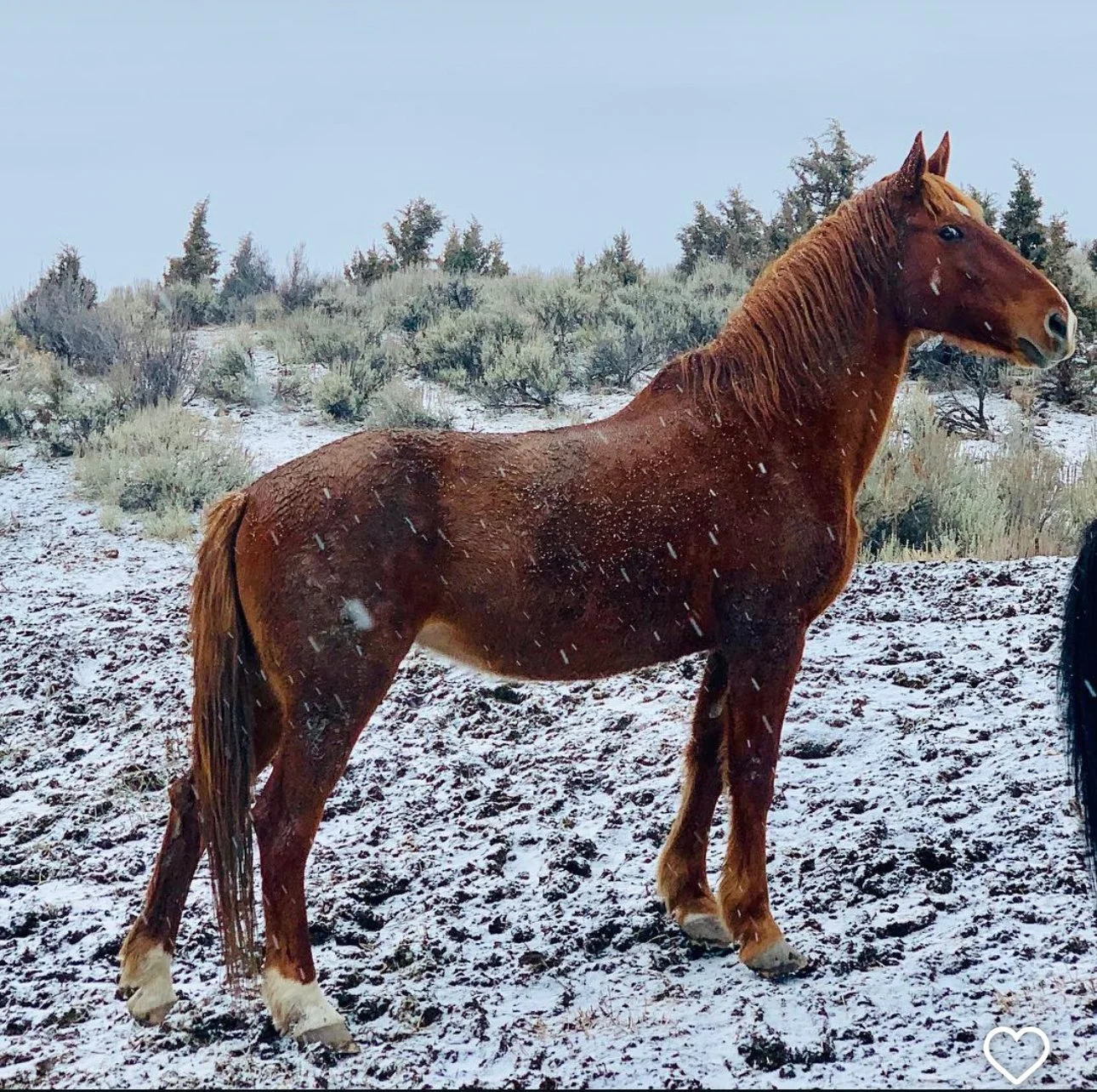
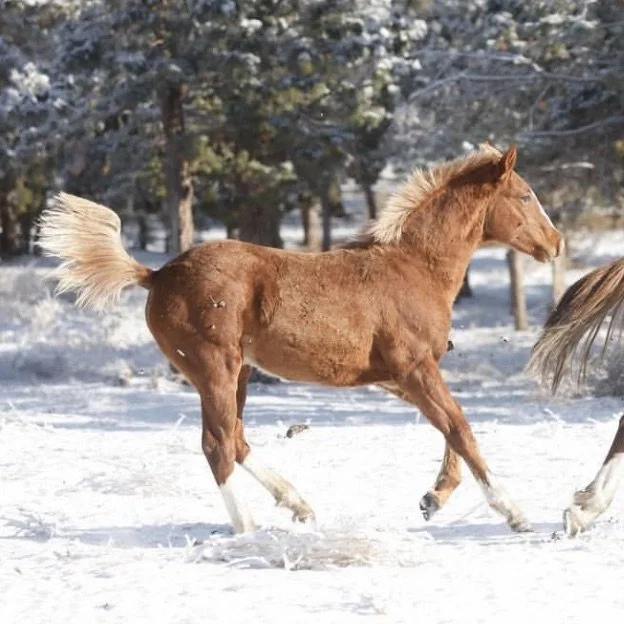
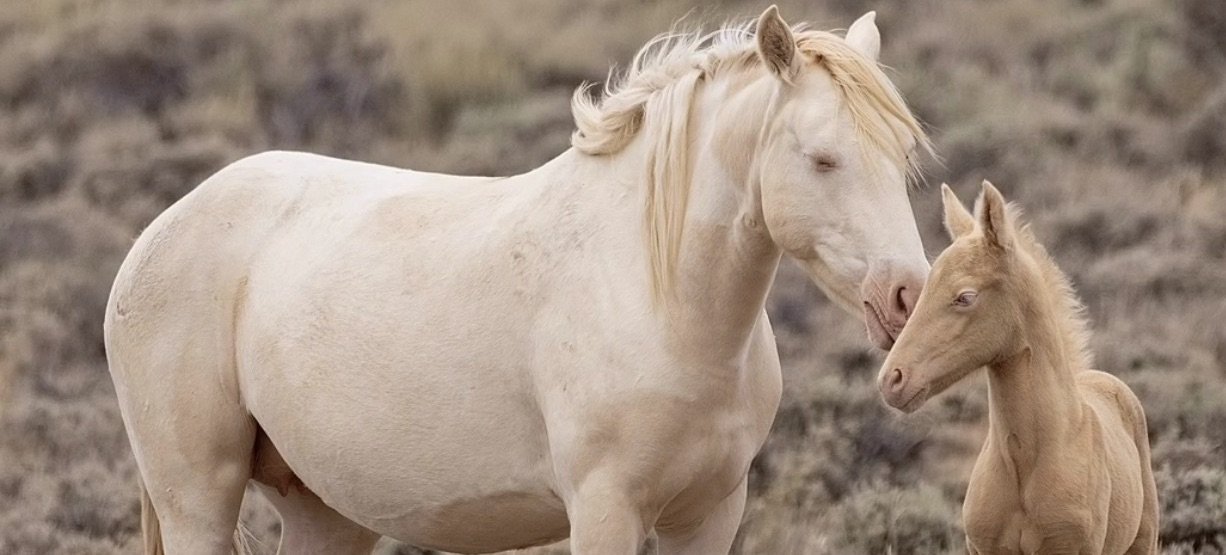
On 30 August 2026, the Wyoming Mustang Institute (@wildhorses.wildplaces) filmed a healthy family of cremellos in Stewart Creek, Wyoming. A honey-colored, nursing foal, Saffron, was with her mother, Moonflower, and scampering with her two-year-old sister and aunt. Blue-eyed cremellos and perlinos, they all moved well and interacted with their herd. Saffron was following and, in some instances, leading her mother.
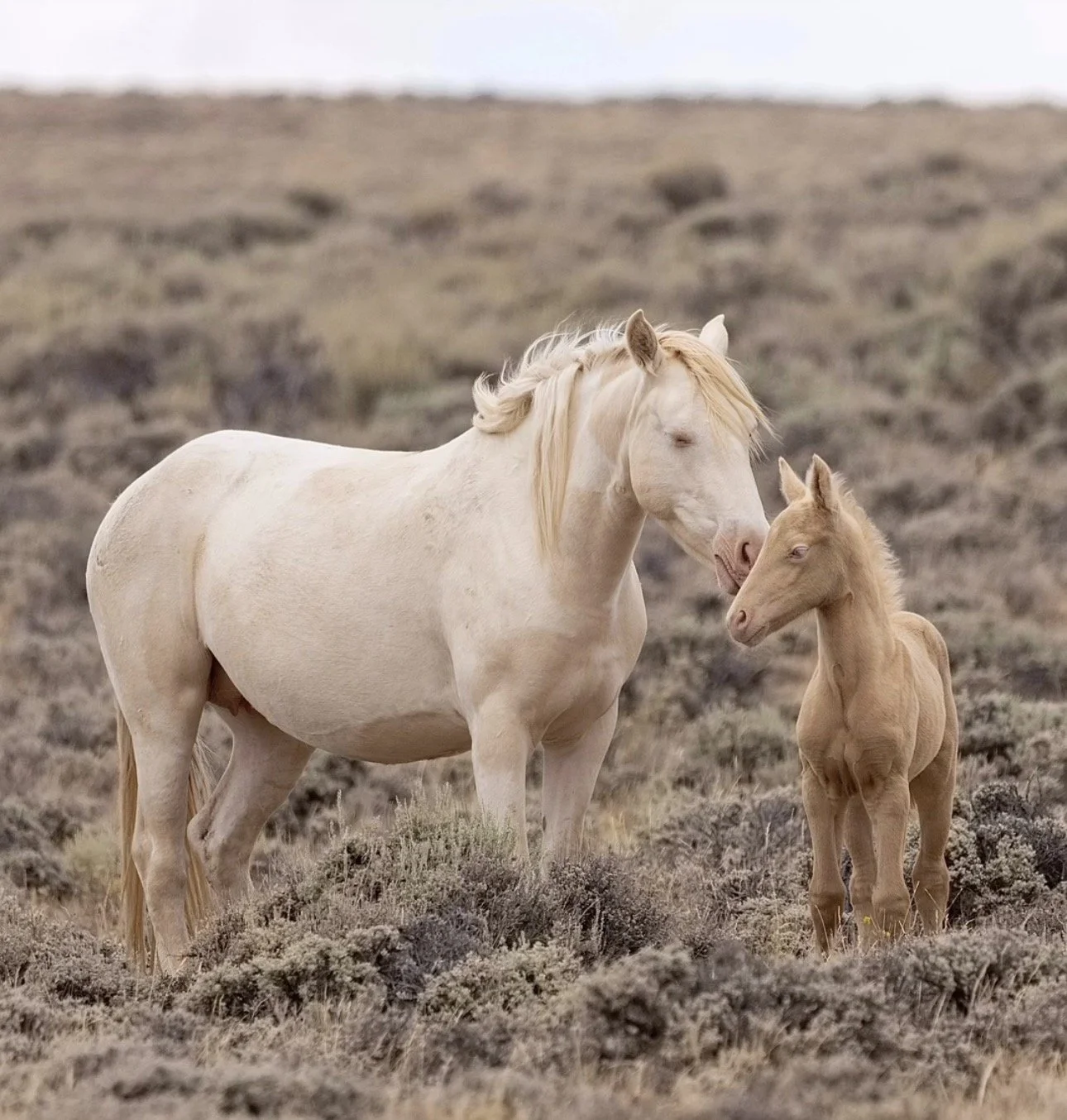
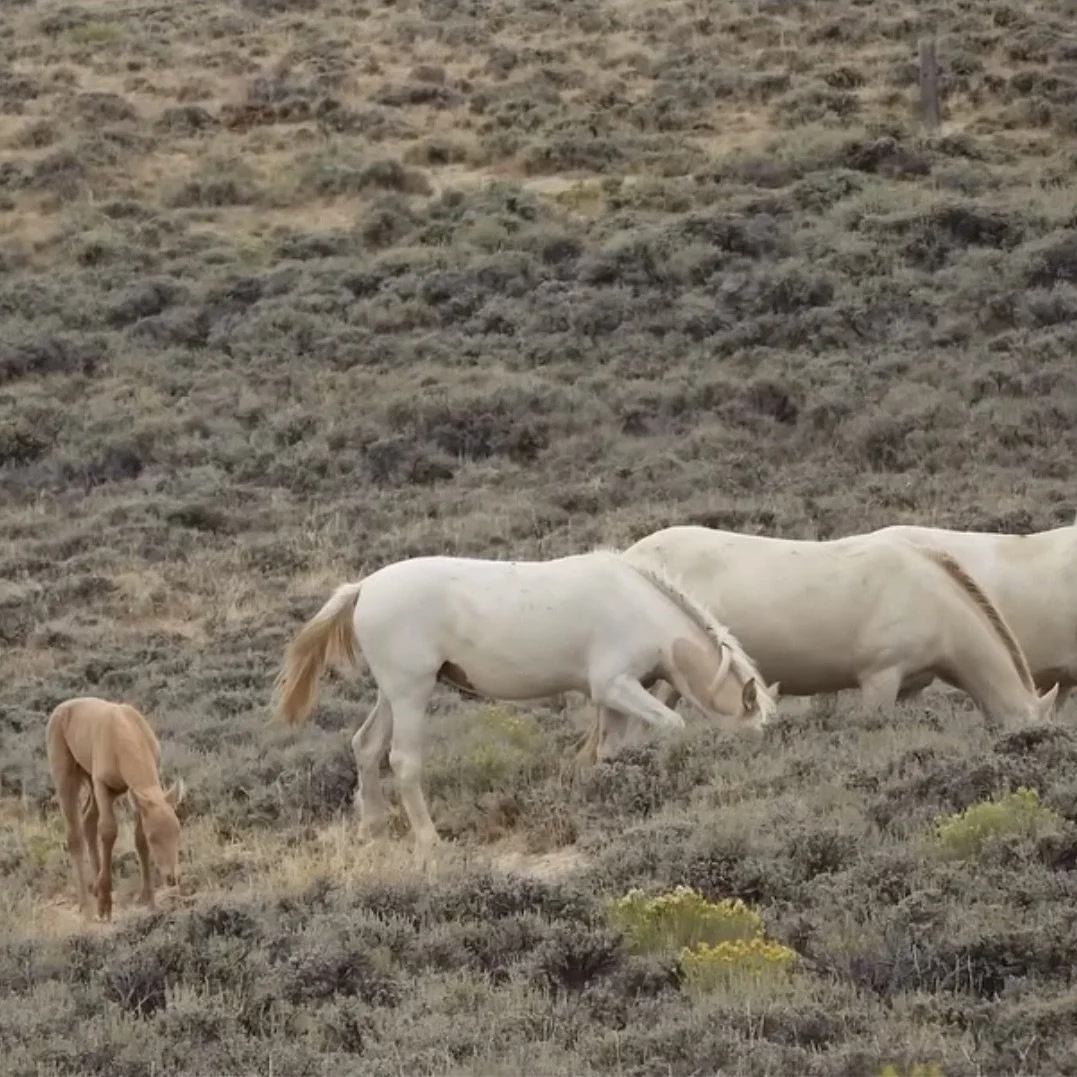
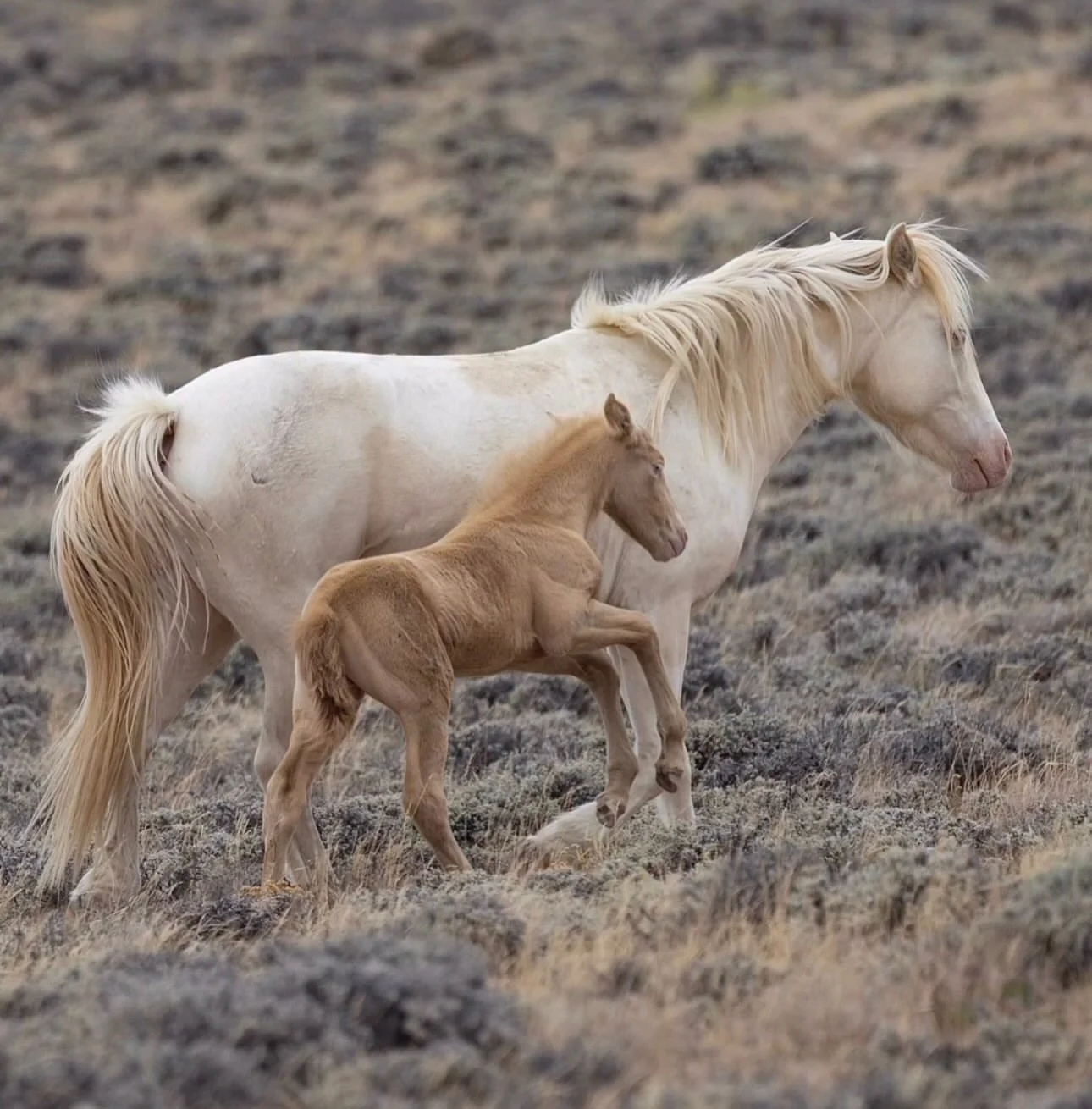
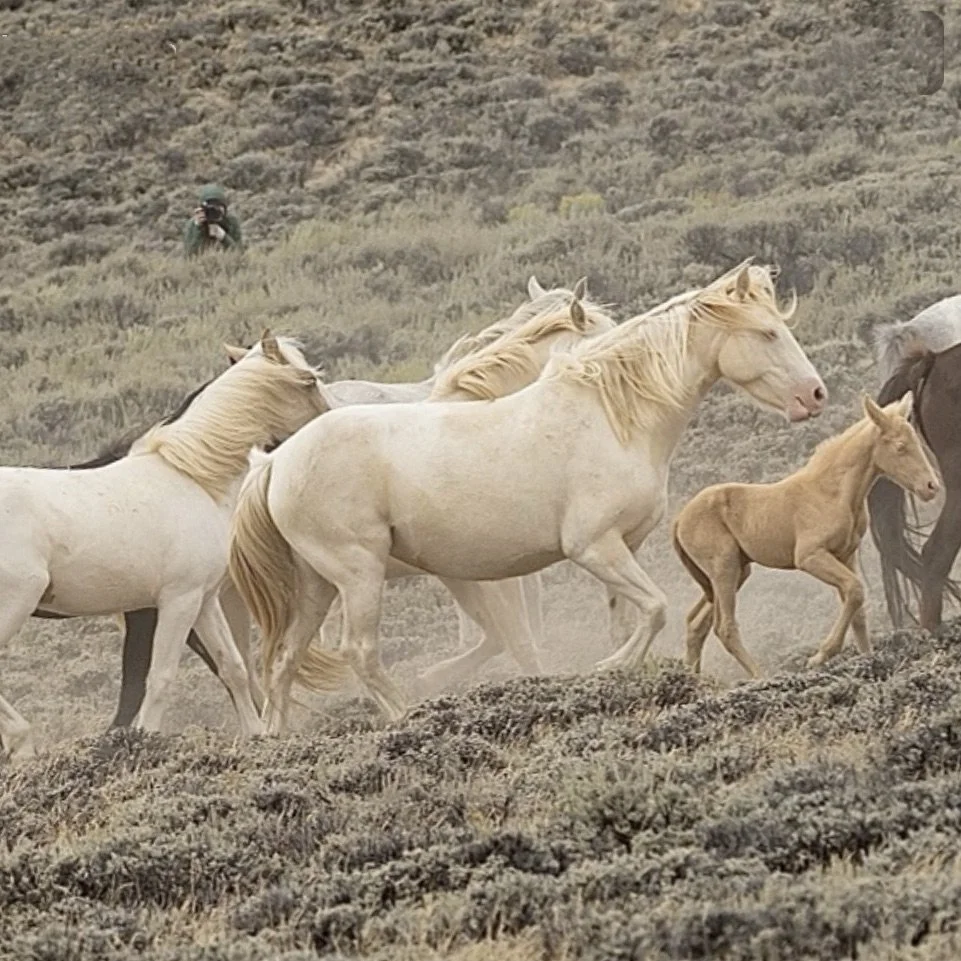
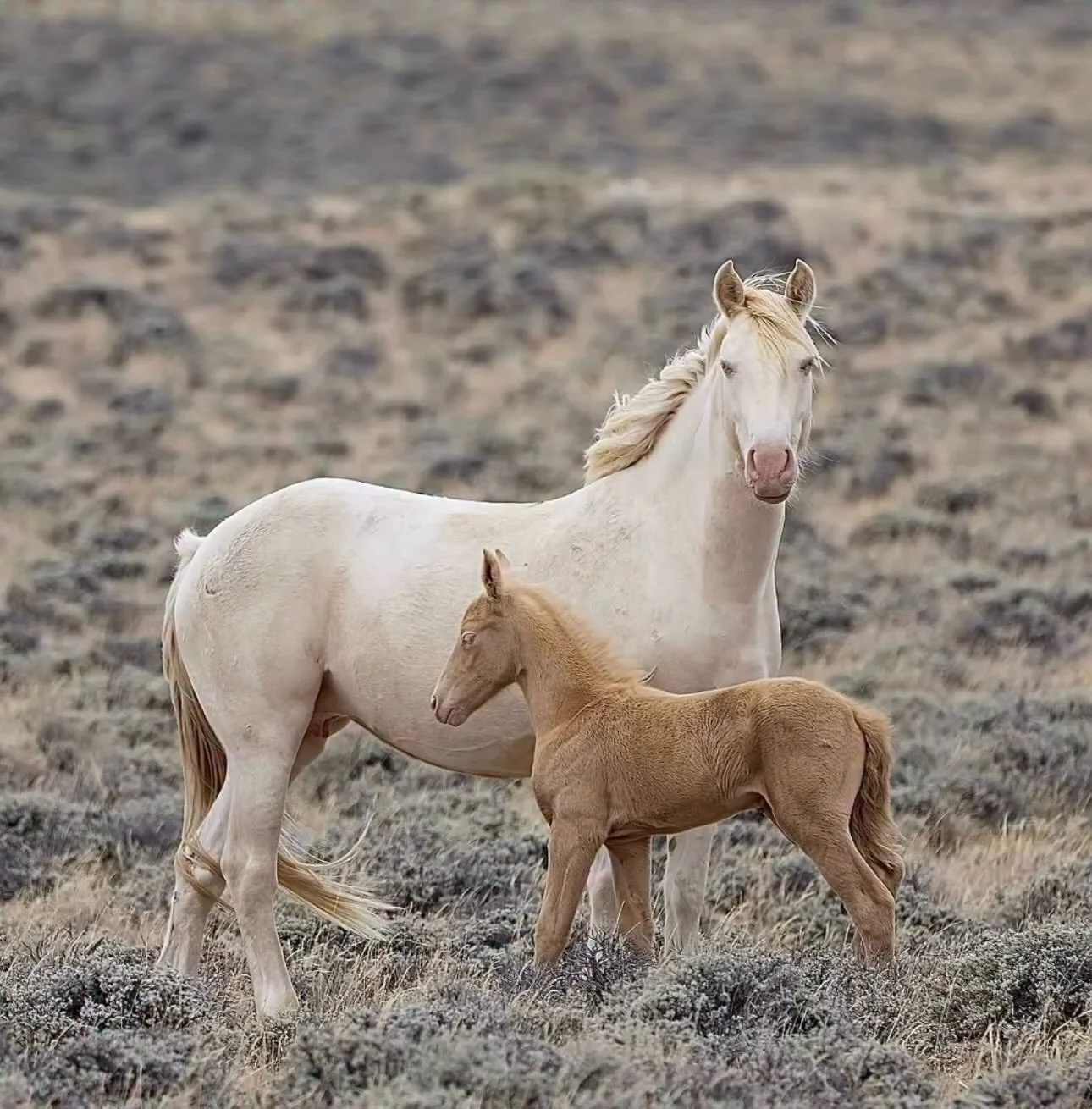
Weeks later, on October 19, this family was rounded up by the BLM Wyoming and it’s contractor, Sampson. We were shocked to learn that Saffron, her sister, and another cremello foal were shot “due to pre-existing condition - abnormality, blind.” According to the Daily Gather Report, “all three were completely blind.” We find that hard to believe. There is no confirmation that a licensed vet was present, but even if one had been, the decision to euthanize is made by BLM staff with or without veterinary concurrence. Many BLM staff believe the old cowboy myth that blue-eyed horses have bad vision and are not desirable candidates for adoption, so they shoot them.
Saffron’s mother and aunt were sent to the Wheatland holding facility. To cause that amount of pain to Moonflower, to rip both her babies away from her and shoot them in the head is quite frankly monstrous. Especially when there is an offer to take blind horses to Skydog.
We have regularly worked with different corrals to take vision-impaired horses. BLM Burns-Oregon, Ridgecrest-California, Palomino Valley-Nevada, Axtell-Utah, and Cañon City-Colorado have all allowed us to take blind horses rather than euthanize them. Why weren’t these Wyoming babies given that chance? Based on observation, it is the opinion of the Wyoming Mustang Institute that Saffron would have continued to thrive in the wild, or would have done well in a loving forever home.
Many people have contacted us asking what they can do to speak up for these horses, so we started the Justice for Baby Saffron petition on Change.org. A donation is not required to sign, just scroll down and click No I’ll Share Instead.
You can also contact the acting BLM Director for Wyoming:
TAKE ACTION
Please sign and share the petition.
Contact the BLM’s Acting Wyoming State Director and demand:
1. A full review and release of evidence.
2. Mandatory evaluations by licensed veterinarians before euthanasia.
3. A change of policy listing blindness, partial or complete, as justification for euthanasia.
4. An end to trap site vision assessments.
5. Retraining of BLM and contractor staff so life and death decisions are not based on superstition and myth.
6. Standardized diagnostic protocols.
,
South Steens Roundup 2022
Before the roundup, we emailed the BLM in Oregon to offer sanctuary to every single mustang they were going to euthanize at the trap. They refused us in writing. The roundup report shows 753 wild horses captured, 22 deaths, 11 Cremellos were euthanized. These were perfectly healthy horses. The attending vet told us the decision to kill them was made by the BLM lead. Skydog received an exemplary rating when the BLM conducted a compliance inspection, so it is deeply frustrating that even when they have the option of allowing us to take on full responsibility for these animals, pay their vet bills, and give them life-long care, they would rather shoot them.
Myth vs Science
Kelli Neubert wrote in Western Horseman, “There are several terms that reference this trait, including "wall-eyed," "moon-eyed" and "glass-eyed." Though some see it as a good omen and a sign of wisdom in a horse, others think it's bad luck or hints toward a spooky mount. Others are afraid that a riding partner with blue eyes is more prone to disease and problems as the horse ages. I've also heard rumors that horses don't see as well and are more sensitive to light when they don't have dark eyes."
Science begs to differ. There have been extensive studies on equine eye color. In a study by the University of Illinois Veterinary Teaching Hospital researchers examined medical records of hundreds of horses to determine if blue-eyed horses are more prone to eye problems. They divided them into two groups: one with diagnosed eye disease, and one without any eye ailments. The conclusion: “Blue-eyed horses are not any more likely to get disease of the eyeball itself than brown-eyed horses. There is a common misconception that the blue color of their iris makes them more likely to get cataracts, have vision problems, or develop equine recurrent uveitis; this study demonstrates that this isn’t true.”
For roundup staff who don’t read scientific studies, the fact that these blue-eyed horses manage to run from a helicopter over rugged terrain into an unfamiliar, difficult-to-navigate trap speaks for itself.
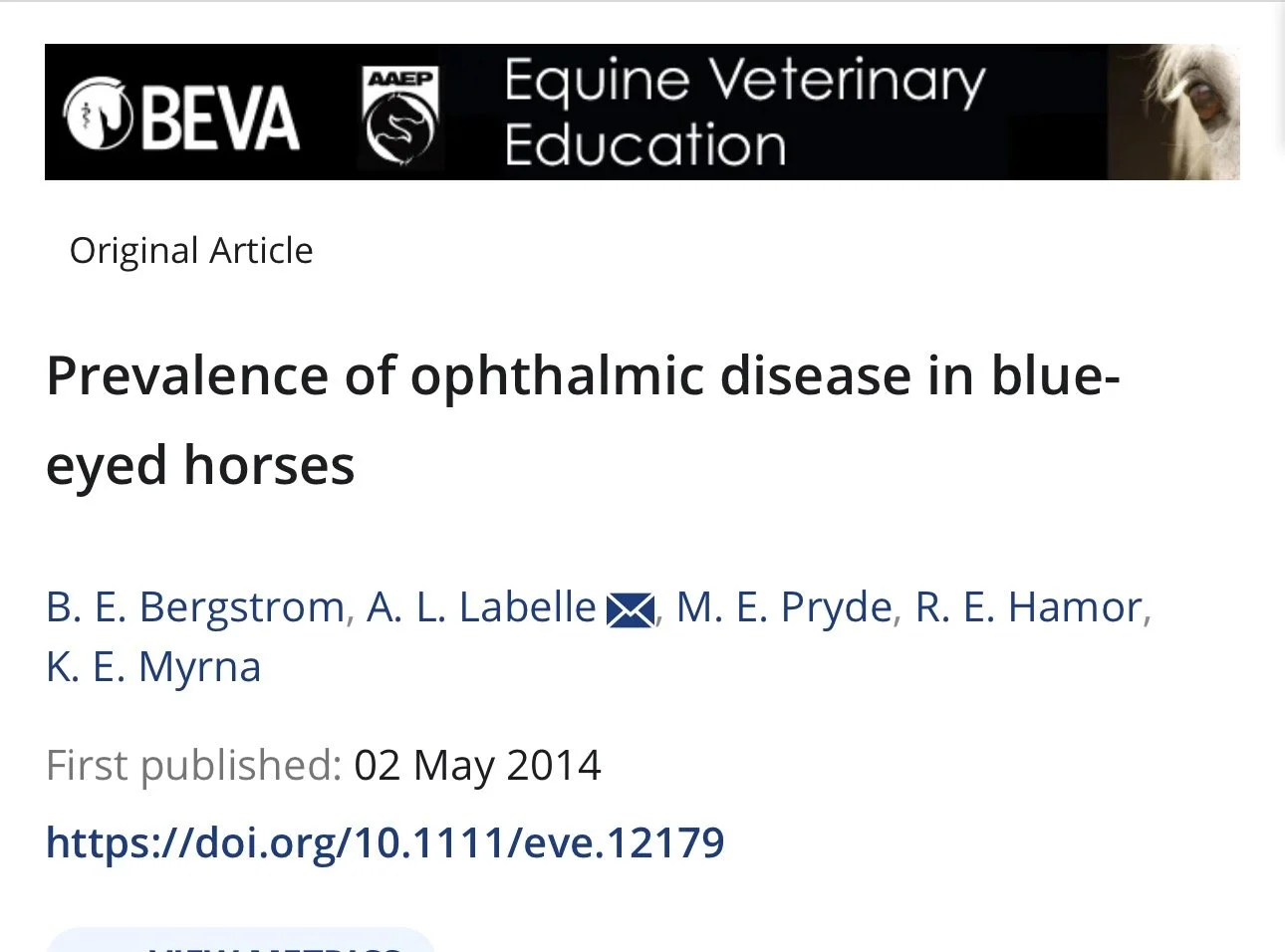
“There was no significant difference in the proportion of blue- and brown-eyed horses when comparing the adnexal and corneal (P = 0.548), corneal and intraocular/orbit (P = 0.379) and adnexal and intraocular/orbit (P = 0.843) categories. A significant difference was detected in the proportion of blue-eyed horses between the adnexal (P = 0.000), corneal (P = 0.033), intraocular/orbital (P = 0.000) and SCC categories, with a higher proportion of blue-eyed horses in the SCC than in the other 3 groups. Horses with blue or heterochromic irides are more likely to develop ocular SCC than horses with brown irides, but are not more likely to have adnexal, corneal or intraocular/orbital disease or to be presented for evaluation of ophthalmic disease. Veterinarians should consider the results of this study when answering questions from the lay public regarding the predisposition of blue-eyed horses to ocular disease.”
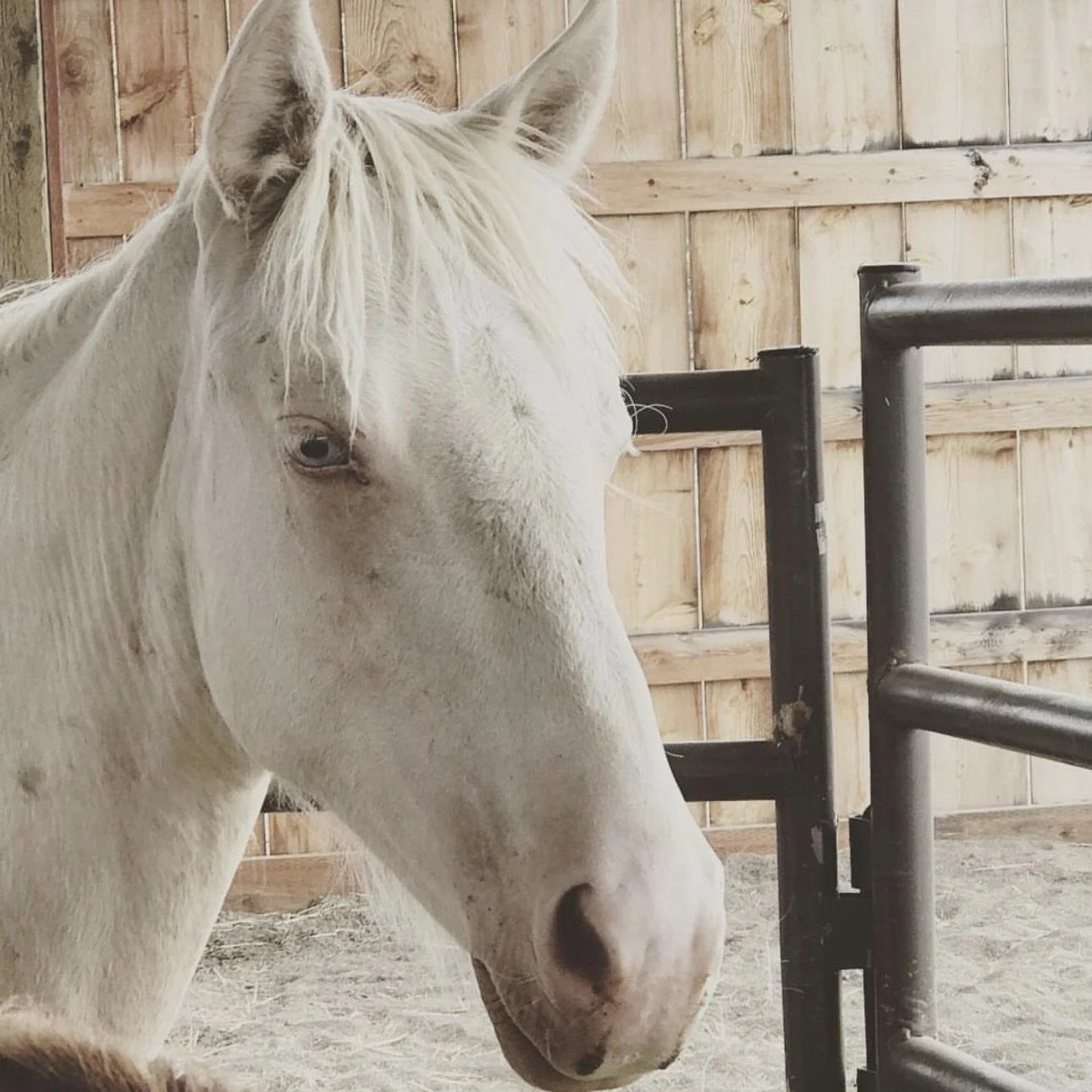
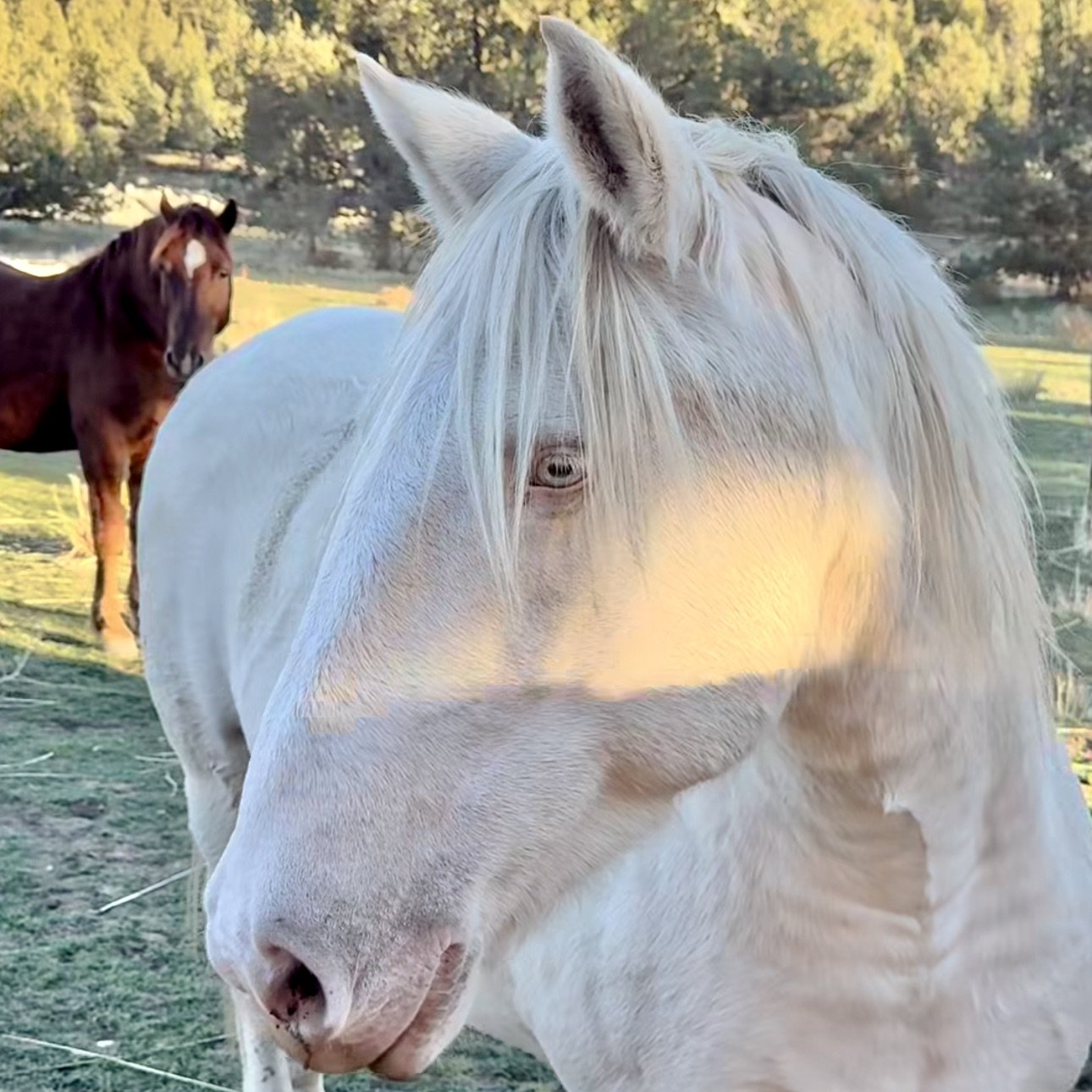
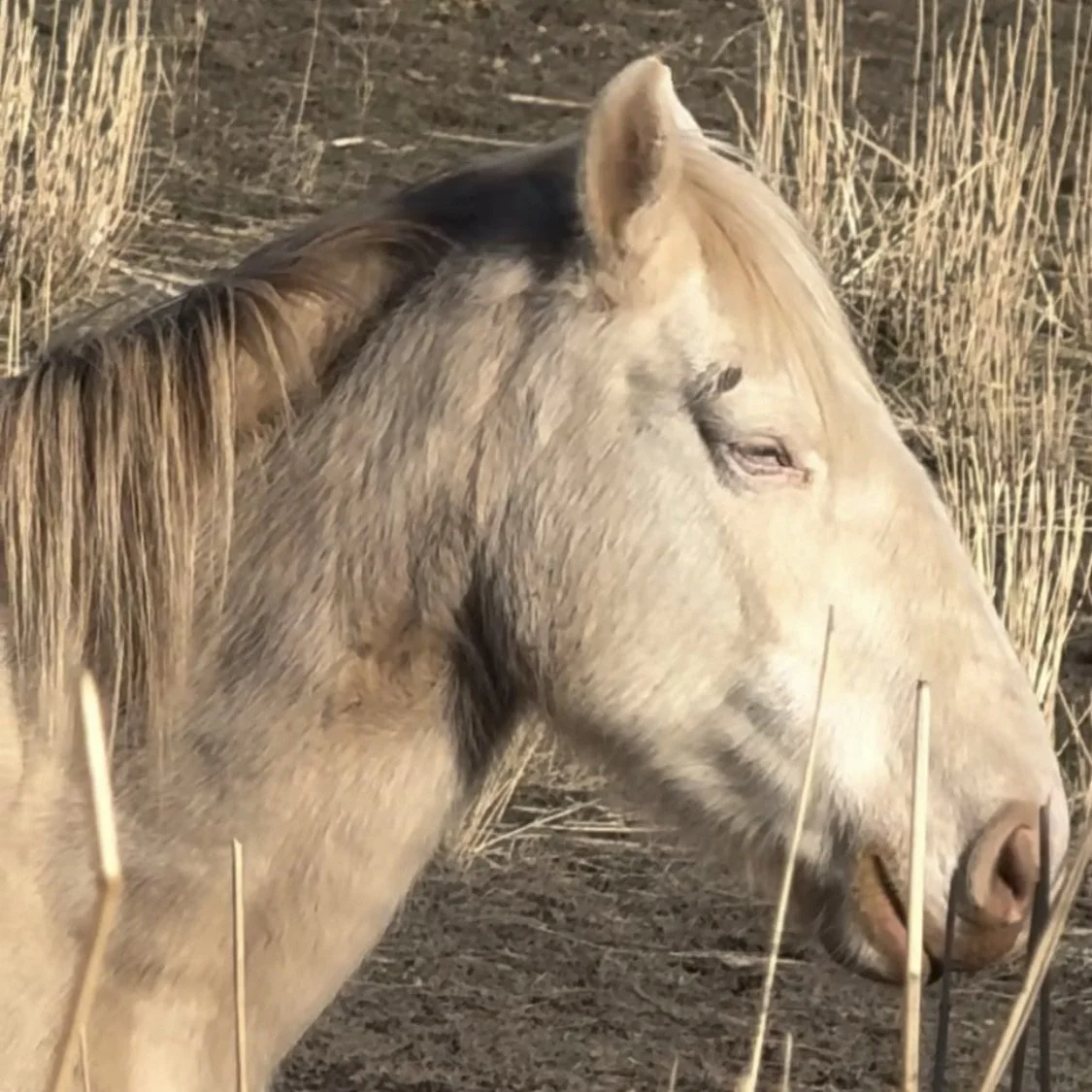
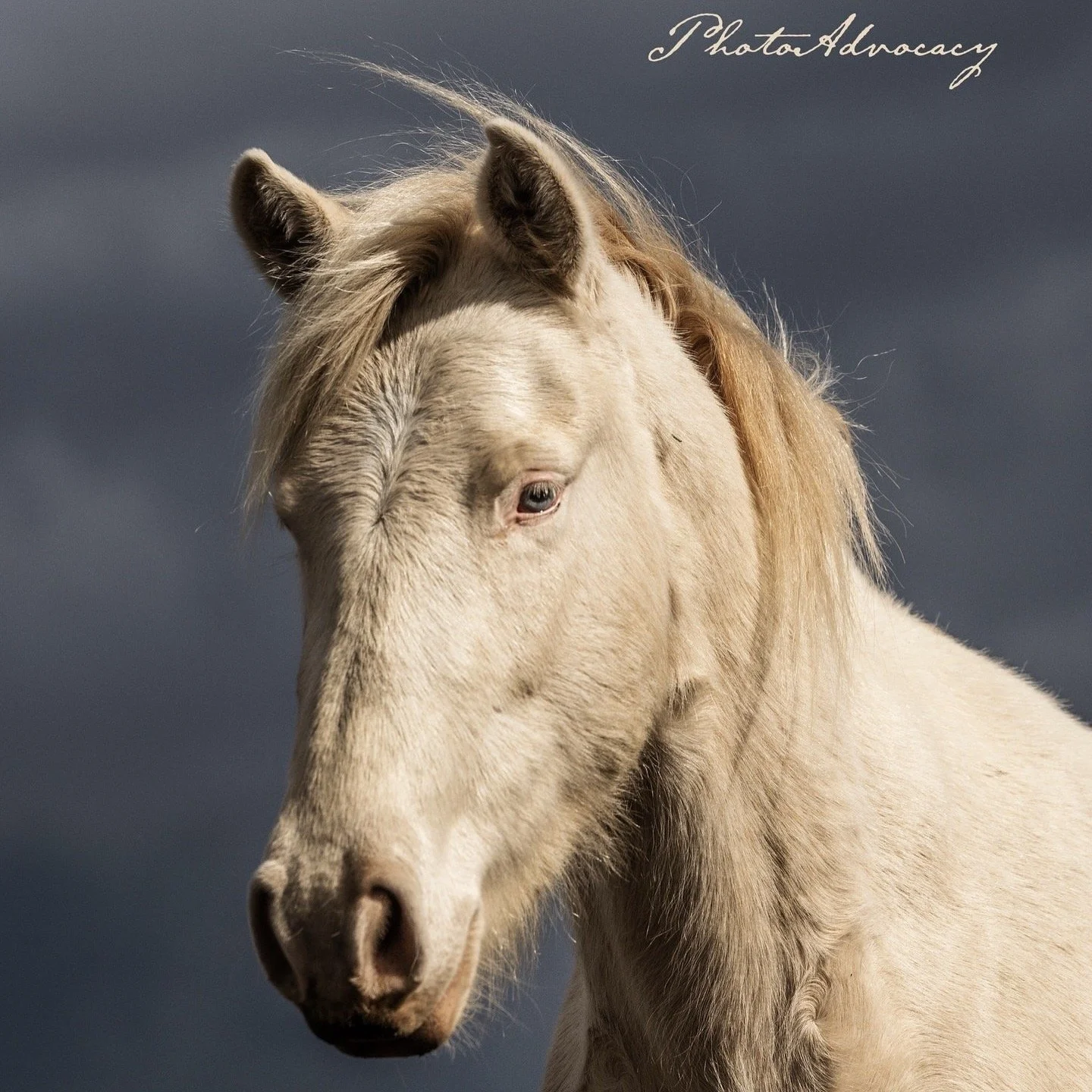
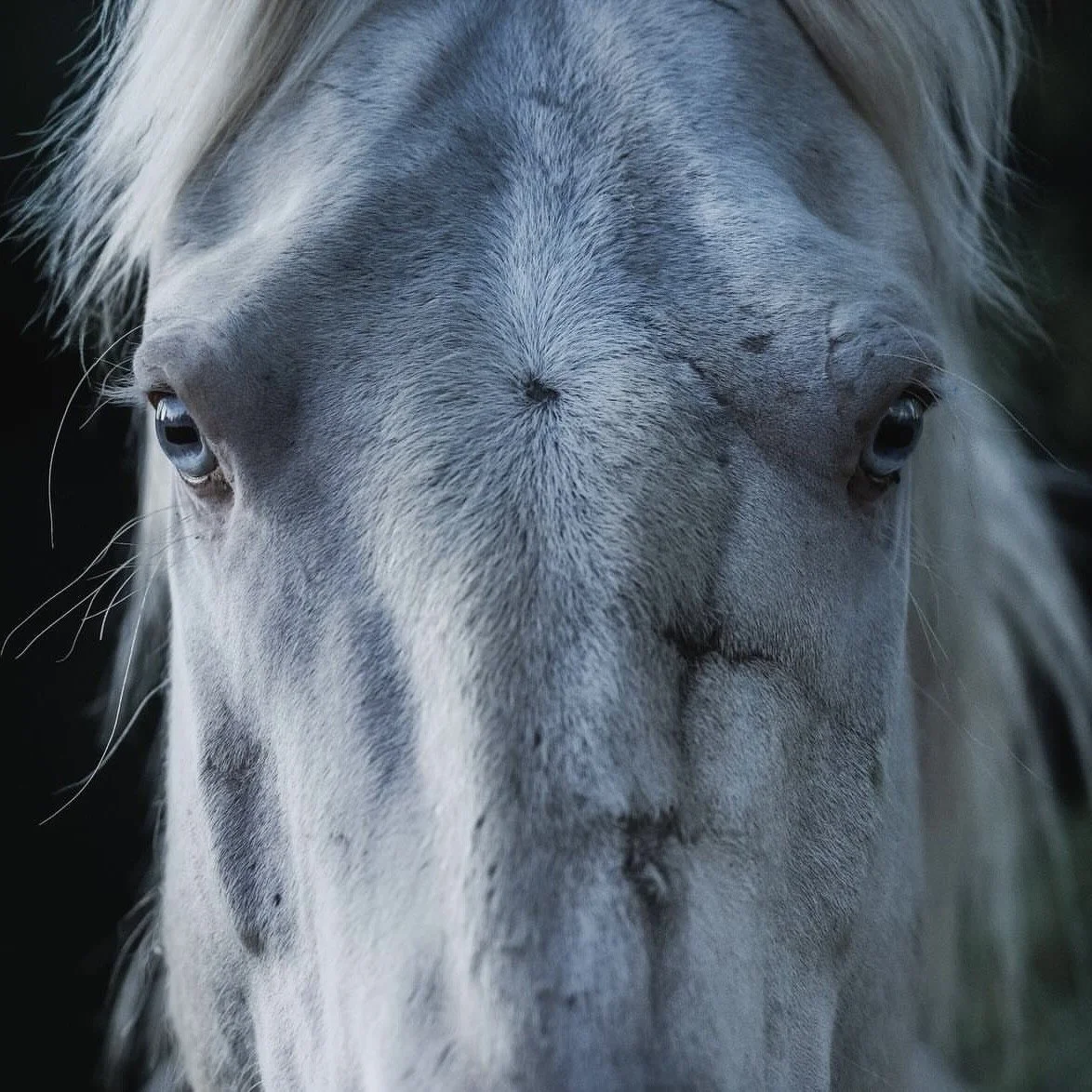
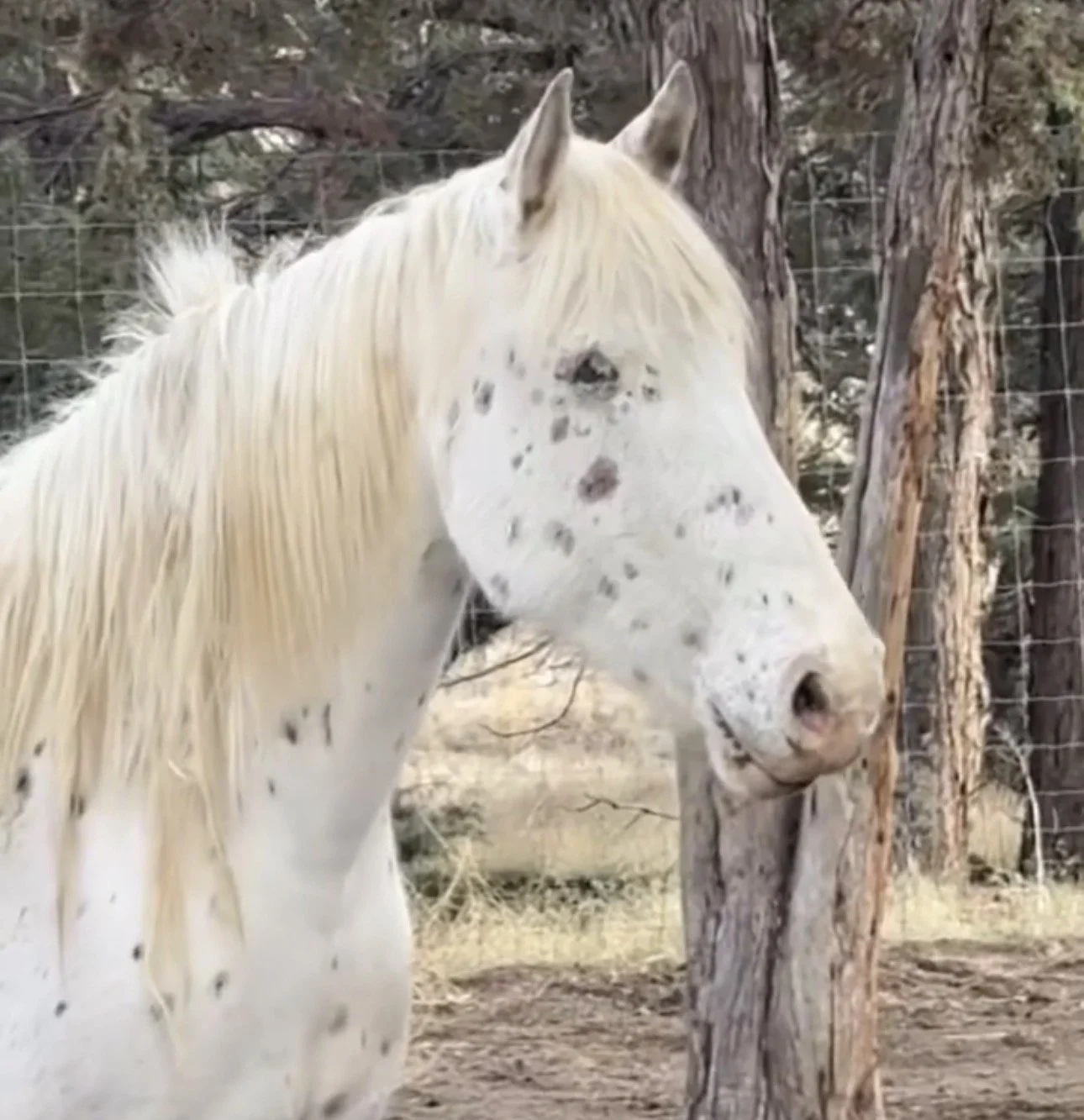
Above: We have four Cremellos and one Smoky Cream (Jojo). None of them have had problems with their eyes.
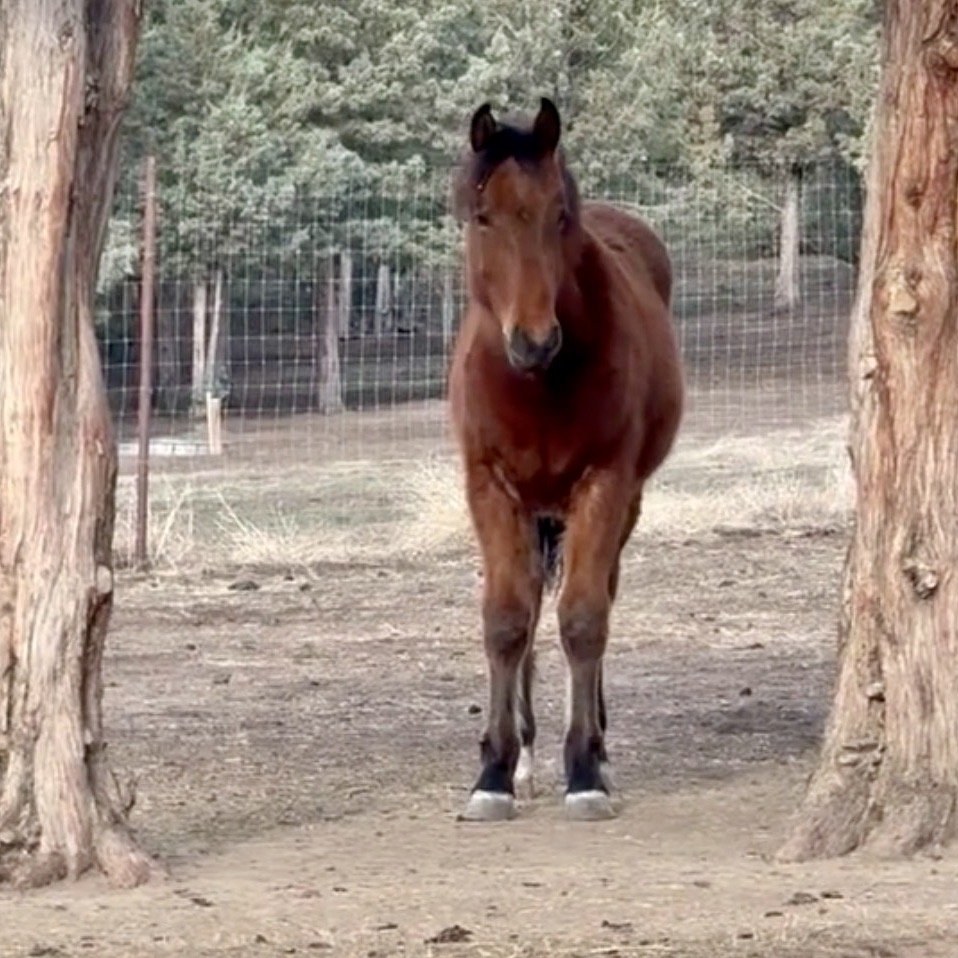
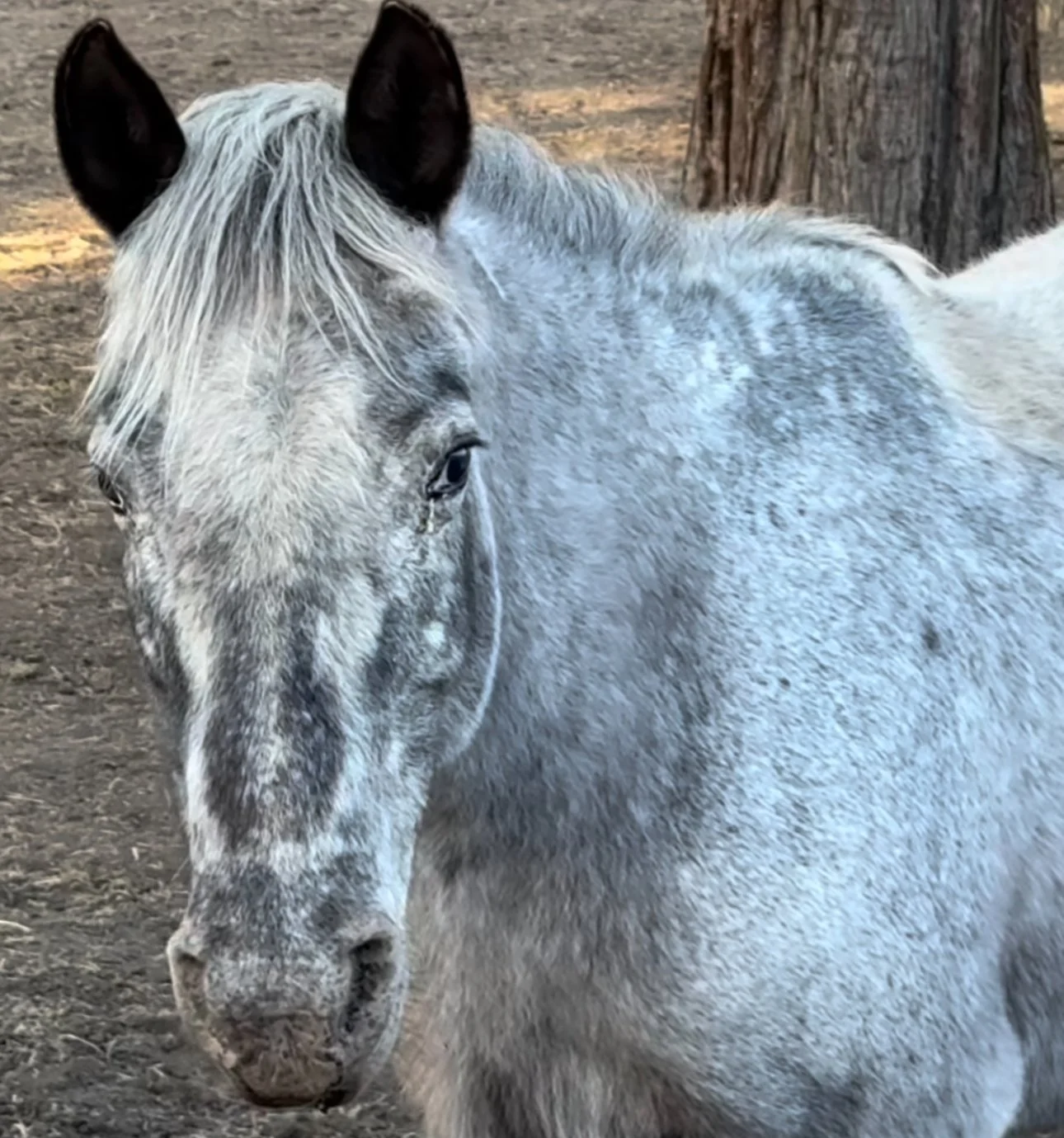
Below: We have number of mustangs who are completely blind, partially blind, have one eye, or have lost vision with age. They are all living full and happy lives at Skydog.